

If you’ve never renovated a home before, the budgeting part can feel oddly abstract. People throw out numbers. Friends share horror stories. Online estimates range from reassuring to terrifying. And none of it seems to quite match your house, your plans, or your tolerance for disruption.
So the question comes up early, and it sticks around: what is a reasonable budget for remodeling?
The honest answer is that there isn’t one clean number. There never has been. Remodeling budgets depend on a mix of scope, age of the house, choices you make along the way, and how much risk you’re willing to carry. In places like Cherry Hill and the surrounding parts of New Jersey, those variables matter even more because the housing stock is older, regulations are specific, and labor costs reflect the local market.
This isn’t about finding a magic dollar amount. It’s about understanding where the money actually goes, where people misjudge costs, and how to plan without backing yourself into a corner halfway through the project.

Why Remodeling Budgets Vary So Widely
Two neighbors can renovate houses of similar size and end up with budgets that are tens of thousands of dollars apart. That’s not unusual. Remodeling is not a standardized product. It’s closer to a custom process that reacts to what’s uncovered once work begins.
Part of the variation comes from the house itself. Homes built in different decades come with different assumptions. Electrical systems, plumbing layouts, framing standards, insulation. A project that looks simple on the surface can shift quickly once walls are opened.
But expectations play an even bigger role. One homeowner wants a functional update that lasts. Another wants a space that feels custom and finished down to every detail. Both are reasonable goals. They just live in different budget ranges.
And then there’s timing. Material pricing fluctuates. Labor availability changes. Permit timelines stretch or compress depending on the municipality and the scope of work. All of that feeds into cost, whether you want it to or not.
Scope Versus Expectations: Cosmetic or Structural?
This is where many budgets quietly break.
A cosmetic remodel focuses on surfaces. Paint, flooring, fixtures, cabinets, finishes. The structure of the house stays largely untouched. These projects are more predictable because fewer hidden conditions come into play.
Structural work is different. Moving walls. Reworking layouts. Updating plumbing or electrical systems to support new designs. Once you cross that line, the project becomes less about appearances and more about how the house actually functions.
Many homeowners plan for a cosmetic budget while expecting structural results. That gap shows up later, usually when estimates come back higher than expected. It’s not that contractors are inflating numbers. It’s that the work being asked for doesn’t match the assumed scope.
Before setting a budget, it helps to be honest about what you’re really changing. Not what you hope it will look like at the end, but what has to physically happen to get there.
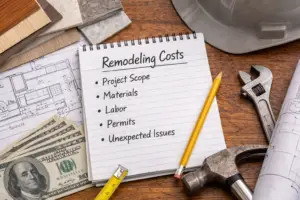
Material Choices and the Long-Term Cost Picture
Materials are one of the most visible parts of a remodel, and also one of the easiest places to miscalculate.
There’s the sticker price, and then there’s the long-term cost. Cheaper materials often mean higher maintenance, shorter lifespan, or more frequent replacement. More expensive materials don’t always mean better, but they often bring consistency and durability that lower-priced options can’t.
Cabinetry is a good example. Stock options may work well in some spaces. In others, they require fillers, modifications, or compromises that affect both function and appearance. Flooring tells a similar story. The least expensive option may look fine initially but struggle under daily wear, especially in busy households.
Reasonable budgeting isn’t about choosing the highest-end products. It’s about understanding where quality matters and where it doesn’t, based on how you actually live in the space.
Labor, Expertise, and Why Quality Matters
Labor is often the largest single portion of a remodeling budget, and it’s also the hardest to compare across estimates.
Experience costs more. So does specialization. A skilled trade professional who knows local codes, understands sequencing, and anticipates problems before they surface brings value that doesn’t always show up as a line item.
Lower labor costs can be tempting, especially when budgets feel tight. But mistakes are expensive. Rework is expensive. Delays are expensive. And living in a construction zone longer than expected has its own cost, even if it’s not measured in dollars.
In many cases, what homeowners perceive as a higher bid is really a more complete one. It accounts for realities that cheaper estimates assume won’t happen.
Permits, Inspections, and Local Regulations in New Jersey
Permits are not optional in many remodeling scenarios, and in New Jersey they are taken seriously. The type of work being done determines what approvals are required, and skipping this step can cause significant problems later, especially when selling the home.
Permit fees themselves are usually not the biggest expense, but the process affects scheduling, inspections, and sometimes scope. Older homes may require updates to meet current codes once work begins, even if those systems weren’t part of the original plan.
This is an area where budgets often underestimate. Not because permits are hidden, but because their impact on time and sequencing isn’t always obvious at the planning stage.
Common Budgeting Mistakes Homeowners Make
One of the most common mistakes is building a budget that assumes everything will go according to plan. Remodels rarely do.
Another is focusing too heavily on the visible parts of the project and ignoring infrastructure. Plumbing, electrical, framing, insulation. These aren’t glamorous, but they are foundational.
There’s also a tendency to compare projects by price alone. Two remodels can look similar in photos and be entirely different in execution. Scope, materials, and allowances matter more than the final number on a proposal.
And then there’s the emotional side. Renovations are stressful. Decisions made under pressure often cost more than those made early, with clear priorities in mind.
The Role of Contingency Planning
Most experienced professionals recommend setting aside a contingency, often in the range of ten to fifteen percent of the overall budget. This isn’t padding. It’s preparation.
Unexpected conditions are common, especially in older homes. Water damage behind walls. Outdated wiring. Structural surprises that weren’t visible during initial planning.
Having a contingency doesn’t mean it will be spent. It means you won’t be forced into rushed decisions if something unexpected comes up. It gives you options. And in remodeling, options are valuable.
When DIY Stops Making Financial Sense
There’s nothing wrong with doing some work yourself, if you have the skill and the time. Painting, minor demolition, simple finish work. These can reduce costs if done correctly.
But larger remodels reach a point where DIY becomes a liability. Permits, inspections, code compliance, and coordination between trades require experience. Mistakes at this level don’t just cost money. They can delay the entire project or require costly corrections later.
Knowing where that line is matters more than most people realize.
How to Approach Budgeting Conversations With Contractors
Clear communication early saves money later. Not by negotiating aggressively, but by aligning expectations.
Sharing a realistic budget range allows professionals to tailor solutions instead of guessing. It helps avoid designs that will never fit financially. And it opens the door to value engineering, where adjustments are made intentionally rather than reactively.
Homeowners who approach these conversations as collaborative tend to have smoother projects. Those who treat budget as a secret often end up frustrated when reality eventually surfaces.
At some point, most homeowners also realize they want a single point of responsibility for coordination, scheduling, and compliance. That’s often when they start looking more closely at established local firms, including Cherry Hill Remodeling, to understand how the process is managed from planning through completion.
A Few Practical Takeaways
A reasonable remodeling budget is not the lowest possible number. It’s the one that reflects the true scope of work, allows for surprises, and aligns with how long you plan to live in the home.
It accounts for quality where it matters, flexibility where it’s needed, and realism about what renovations actually involve. When those pieces are in place, the budget becomes a tool instead of a source of stress.
Frequently Asked Questions
How much should I set aside for unexpected costs?
In many cases, setting aside ten to fifteen percent of the total budget provides a reasonable buffer.
Why do estimates vary so much for similar projects?
Differences in scope, materials, assumptions, and experience all affect pricing. What looks similar on paper may not be similar in execution.
Is it better to renovate in phases to save money?
Sometimes, but phasing can also increase costs if work has to be repeated or systems are addressed multiple times.
Do permits significantly increase the cost of remodeling?
Permit fees themselves are usually modest, but compliance can affect scope, scheduling, and required upgrades.
When should I involve a professional early in the process?
If the project affects structure, layout, plumbing, or electrical systems, early input can prevent costly redesigns later.
A remodeling budget isn’t about guessing right. It’s about planning well enough that when conditions change, you’re still in control.